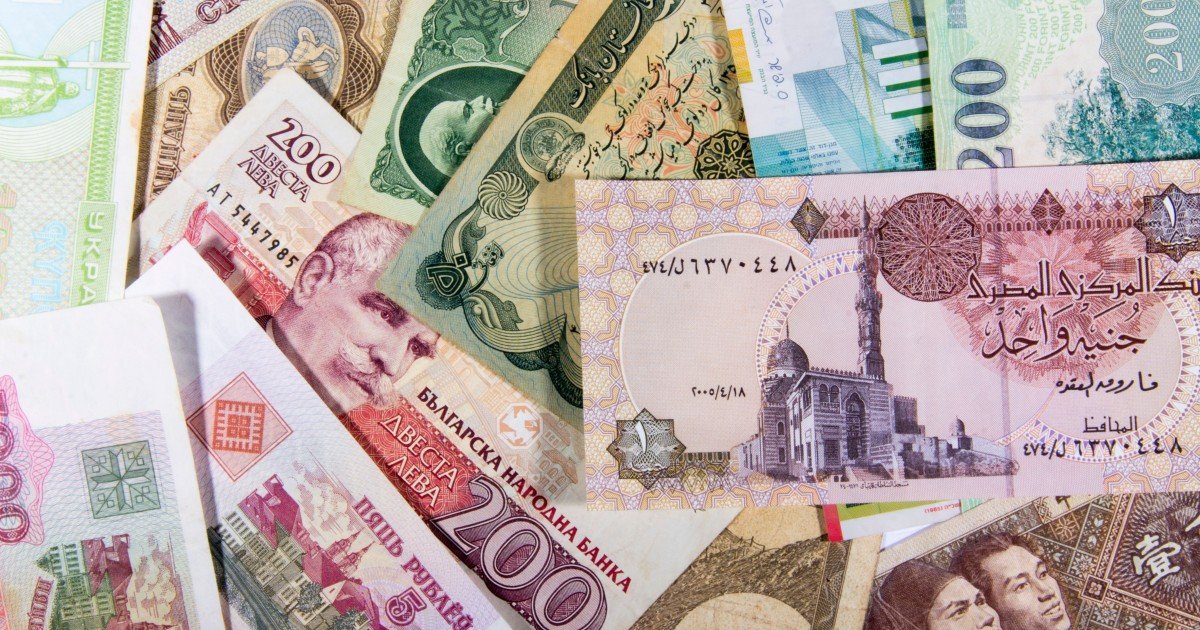
When you deposit money into a bank, transfer funds to another country, withdraw cash from an ATM, or pay for something with a card, several financial systems are working quietly in the background. Understanding how banking systems work around the world means looking beyond the familiar image of a local bank branch and exploring the network of central banks, commercial banks, payment systems, financial regulators, digital platforms, and international institutions that keep money moving.
Banking does not work exactly the same way in every country. A person in India may use instant digital payments for everyday purchases, while someone in another country may rely more heavily on cards, bank transfers, cash, or mobile wallets. Central banks also have different structures, monetary policies, currencies, and regulatory responsibilities.
Yet there is a common foundation.
Most modern banking systems perform several essential functions: they hold deposits, provide payment services, extend credit, transfer money, manage financial risk, support businesses, and connect individuals with the wider economy.
The interesting part is what happens behind the scenes.
When you tap a card or send money online, your transaction may pass through several institutions before the recipient sees the funds. When a bank approves a loan, it is making a decision based on credit risk, regulation, funding, and economic conditions. When central banks change monetary policy, their decisions can eventually influence borrowing costs, savings, investment, currencies, and household finances.
This guide explains the structure of banking systems around the world, how different countries organize them, how money moves through banks, and how traditional banking is changing in the digital era.
What Is a Banking System?
A banking system is the organized network of financial institutions, payment infrastructure, regulatory authorities, rules, and technologies that allows money and credit to move through an economy.
A country’s banking system commonly includes:
- Central banks
- Commercial banks
- Cooperative or community banks
- Savings institutions
- Investment and specialized banks
- Digital banks
- Payment service providers
- Financial technology companies
- Clearing and settlement systems
- Financial regulators
These organizations do not all perform the same job.
A central bank generally focuses on monetary and financial stability, while commercial banks typically provide services directly to individuals and businesses.
Payment systems provide the infrastructure needed to move money between accounts. Regulators establish rules designed to promote stability, consumer protection, market integrity, and financial security.
The result is an interconnected system rather than one single institution.
How Does a Bank Actually Work?
At its simplest, a bank connects people and businesses that have money with people and businesses that need financing.
Suppose you deposit money into a bank account. The bank records a deposit obligation to you. At the same time, the bank manages its assets, liquidity, capital, and other resources.
Banks can earn income from activities such as lending and financial services while paying expenses such as operating costs, interest on certain deposits, technology costs, and regulatory requirements.
Deposits Are More Than Physical Cash
Modern banking is largely based on account records rather than physical notes.
If your account shows a balance of 50,000, that does not mean the bank has placed 50,000 worth of currency in a box with your name on it.
Your account balance represents a claim against the bank.
The bank maintains accounting records showing what it owes depositors and what it owns or is owed through loans and other assets.
This is one reason trust and regulation are so important to banking.
Banks Provide Credit
Banks also provide loans to households and businesses.
Examples include:
- Home loans
- Vehicle financing
- Business loans
- Working-capital facilities
- Personal loans
- Education financing
- Credit lines
When a bank provides credit, it takes on risk.
The borrower may repay on schedule, repay early, refinance, or potentially fail to repay. Banks therefore evaluate creditworthiness and manage their loan portfolios carefully.
Interest rates help compensate lenders for funding costs, operating expenses, risk, and other factors.
What Does a Central Bank Do?
At the center of many national banking systems is a central bank.
Although the exact responsibilities differ between countries, central banks commonly have important roles involving monetary policy, financial stability, currency, banking-system liquidity, and payment infrastructure.
Examples of central banks include the Reserve Bank of India, the Federal Reserve System in the United States, the Bank of England, the European Central Bank, and the Bank of Japan.
Their structures and mandates are not identical.
Monetary Policy
One of the most closely watched responsibilities of a central bank is monetary policy.
Central banks may adjust policy conditions to influence borrowing, spending, investment, inflation, and broader economic activity.
The transmission process is not immediate or perfectly predictable.
For example, when policy conditions become tighter, borrowing can become more expensive. Households may reconsider large purchases, while businesses may reassess investment plans.
When conditions become easier, borrowing and economic activity can receive support.
The actual effect depends on the country’s financial structure and wider economic environment.
Banker to Banks
Central banks can also provide services and liquidity to the banking system.
Commercial banks may maintain accounts with the central bank and use central-bank infrastructure for certain settlement activities.
This helps create an organized foundation for the financial system.
Currency and Cash
Central banks are also closely associated with a country’s currency and physical cash system, although the exact responsibilities for issuing, distributing, and managing banknotes differ by jurisdiction.
Even as digital payments become more common, cash remains important in many economies.
How Do Commercial Banks Work?
Commercial banks are the institutions most people interact with directly.
They provide everyday financial services to individuals, companies, and organizations.
Common services include:
- Checking or current accounts
- Savings accounts
- Debit cards
- Credit cards
- Loans
- Mortgages
- Business banking
- Domestic transfers
- International transfers
- Online banking
- Mobile banking
The business model can vary significantly between countries and individual institutions.
Why Do Banks Need Deposits?
Deposits can provide banks with an important source of funding.
A bank does not simply store all deposited money without using its financial resources. It manages its balance sheet, maintaining appropriate liquidity while deploying funds through loans and other assets.
This creates an important economic function.
Instead of money sitting completely idle, banking institutions can help channel financial resources toward households, businesses, investment, and economic activity.
However, this process involves risk, which is why banking regulation, capital requirements, liquidity rules, supervision, and risk management matter.
How Does Money Move From One Bank Account to Another?
A bank transfer may look instant to the customer, but the underlying process depends on the payment system being used.
Imagine sending money from Bank A to Bank B.
The transaction may involve:
- The sender’s bank receiving the payment instruction.
- The payment system processing or routing the transaction.
- The participating institutions exchanging payment information.
- Clearing and settlement processes taking place.
- The receiving bank updating the recipient’s account.
Some payment systems settle transactions individually and quickly. Others process payments in batches or according to defined settlement schedules.
The user experience can therefore be much simpler than the infrastructure underneath it.
What Is Clearing and Settlement?
These two terms are often confused.
Clearing generally involves the processes used to determine what financial institutions owe one another after transactions are initiated.
Settlement is the actual completion of the financial obligation.
Consider a simplified example.
If thousands of customers from different banks make payments to one another during a day, it would be inefficient for every institution to manually settle every relationship without organized infrastructure.
Payment and clearing systems can calculate obligations and facilitate settlement according to their operating rules.
This infrastructure is one of the hidden foundations of modern banking.
How Are Banking Systems Different Around the World?
The core banking functions are similar across countries, but the way they are delivered can be very different.
Differences may involve:
- Currency
- Central-bank structure
- Interest-rate frameworks
- Banking regulations
- Deposit protection
- Payment networks
- Consumer habits
- Digital infrastructure
- Cash usage
- Credit availability
- Financial inclusion
- Tax and reporting requirements
These differences reflect each country’s economic history, institutions, technology adoption, and public policy.
Banking in India
India has a large and diverse banking ecosystem that includes public-sector banks, private-sector banks, cooperative institutions, regional institutions, digital services, and a rapidly developing payments environment.
Digital payments have become a major part of everyday financial activity, making it possible for many consumers and small businesses to move money without relying heavily on cash.
Mobile connectivity has also helped expand access to financial services.
Banking in the United States
The United States has a large and highly developed financial system with commercial banks, community banks, credit unions, investment institutions, payment networks, and other financial organizations.
The Federal Reserve plays a central role in monetary policy and financial-system operations.
Consumers commonly use checking accounts, debit cards, credit cards, electronic transfers, and other payment methods.
Banking in the European Union
Banking in Europe is particularly interesting because multiple countries share the euro while retaining national banking institutions and regulatory structures.
The European Central Bank plays a central role in the euro area.
At the same time, individual countries have their own banking institutions and financial frameworks.
This creates a system in which national and regional financial structures operate together.
Banking in Japan
Japan has a mature banking system with major commercial institutions, regional banks, financial cooperatives, and a strong central-bank presence.
The Bank of Japan plays an important role in monetary policy and financial stability.
Japan also illustrates how banking systems can evolve within economies where cash has historically remained important while digital financial services continue expanding.
Banking in the United Kingdom
The United Kingdom has a sophisticated banking and financial ecosystem involving commercial banks, building societies, payment institutions, investment firms, and other financial organizations.
The Bank of England plays an important role in monetary and financial stability, while financial regulation is handled through dedicated regulatory structures.
These examples demonstrate that there is no single universal banking model.
How Do Digital Banks Work?
Digital banking has changed how people interact with financial institutions.
A digital bank can provide many traditional services through websites and mobile applications rather than relying on a large network of physical branches.
Customers may be able to:
- Open accounts digitally
- Transfer money
- Deposit funds through supported methods
- Manage cards
- Apply for financial products
- Monitor transactions
- Receive notifications
- Verify their identity remotely
The important distinction is that digital banking is primarily a delivery model, while the underlying financial functions still depend on regulated banking and payment infrastructure.
A mobile application does not eliminate the need for secure account management, compliance, risk controls, payment processing, and financial regulation.
What Role Does Financial Technology Play?
Financial technology, commonly called fintech, has introduced new ways to deliver financial services.
Fintech companies may specialize in:
- Payments
- Digital wallets
- Lending
- Financial management
- Remittances
- Identity verification
- Fraud detection
- Investment platforms
- Banking infrastructure
Fintech does not always replace traditional banks.
In many cases, banks and fintech companies interact through partnerships, technology providers, payment infrastructure, or specialized services.
This has made the financial ecosystem more interconnected.
How Do Banks Protect Customers From Fraud?
Banking systems have to manage a constant security challenge.
Every digital transaction creates an opportunity for fraudsters to exploit stolen credentials, social engineering, malware, account takeover, or other techniques.
Banks therefore use multiple layers of security.
These may include:
- Passwords and authentication
- One-time verification codes
- Device recognition
- Transaction monitoring
- Behavioral analysis
- Encryption
- Fraud detection systems
- Account alerts
- Payment limits
- Identity verification
Modern fraud detection increasingly uses automated systems that examine transaction patterns.
For example, a transaction that differs dramatically from a customer’s usual behavior may receive additional scrutiny.
However, technology cannot eliminate every threat.
Customers remain an important part of the security process.
A bank will generally never need a customer to disclose a confidential password or authentication code to an unknown caller. Consumers should also be cautious about unexpected payment requests, suspicious links, and urgent messages asking for financial information.
What Is Deposit Insurance?
Deposit insurance is a protection mechanism used in many countries to protect eligible depositors if a covered bank fails.
The exact rules vary by jurisdiction.
Important differences can include:
- Maximum coverage limits
- Eligible account types
- Covered institutions
- Funding arrangements
- Treatment of joint accounts
- Claim procedures
Deposit insurance is different from a guarantee that every financial product will always maintain its value.
For example, investment products may be subject to market risk and may not receive the same protection as qualifying bank deposits.
Consumers should understand what protection applies to their particular account and country.
How Do International Banking Systems Connect?
Banking becomes more complicated when money crosses borders.
Suppose someone sends money from one country to another.
The transaction may involve:
Sender → sending institution → payment or correspondent network → receiving institution → recipient
International payments can require additional checks involving currency conversion, sanctions screening, fraud prevention, regulatory reporting, and identity verification.
Correspondent Banking
Banks may maintain relationships with other banks to facilitate international transactions.
A bank in one country may not have a direct account relationship with every bank worldwide. Correspondent banking arrangements can help institutions access international payment networks.
This is one reason international transfers may involve more intermediaries than domestic transfers.
Foreign Exchange
International transactions often require one currency to be converted into another.
The exchange rate used can depend on market conditions, the institutions involved, transaction timing, and applicable fees or spreads.
This means the amount received by the recipient may differ from a simple currency conversion calculated using a publicly quoted exchange rate.
How Do Banking Systems Support the Global Economy?
Banking systems do more than hold people’s money.
They help facilitate economic activity.
Businesses use banks to manage payroll, pay suppliers, receive customer payments, finance expansion, and manage working capital.
Individuals use banks to save, borrow, make purchases, pay bills, and transfer funds.
Governments interact with financial institutions for payments, debt markets, and broader economic operations.
Investors use financial institutions to access markets and manage assets.
The banking system therefore acts as one of the major channels through which money moves between economic participants.
For a broader understanding of money itself, read this complete guide to how money works.
The distinction is useful: money is the medium used for economic exchange, while banking systems provide much of the infrastructure through which that money and related financial claims are stored, transferred, borrowed, and settled.
How Banking Systems Respond to Economic Changes
Banking systems are closely connected to the wider economy.
During periods of strong economic growth, demand for credit may increase as households purchase homes and businesses invest.
During difficult economic periods, banks may become more cautious about lending because credit risk can increase.
Inflation can influence interest rates and borrowing costs. Currency movements can affect international transactions and businesses that rely on imports or exports.
Financial stress can also spread through interconnected institutions.
This is why regulators and central banks monitor banking conditions carefully.
A banking system must balance several objectives:
- Supporting economic activity
- Maintaining liquidity
- Managing credit risk
- Protecting customers
- Preserving financial stability
- Preventing financial crime
- Maintaining confidence
Achieving all of these goals at once is one of the central challenges of modern financial policy.
What Is Changing in Global Banking in 2026?
Banking in 2026 is increasingly shaped by digital infrastructure, artificial intelligence, instant payments, cybersecurity, open banking initiatives, cloud technology, and evolving financial regulation.
One of the biggest changes is that the definition of a “banking experience” is becoming less tied to a physical branch.
Customers increasingly expect financial services to be available through mobile devices and digital platforms.
Artificial Intelligence in Banking
AI can be used for tasks such as fraud detection, customer-service automation, risk analysis, document processing, and financial operations.
However, financial institutions must consider accuracy, security, privacy, explainability, bias, and regulatory requirements when deploying automated systems.
Instant Payments
Fast payment infrastructure is changing expectations about how quickly money should move.
When customers become accustomed to near-real-time domestic payments, traditional delays can feel increasingly inconvenient.
Open Banking
Open banking frameworks can allow customers to authorize regulated third parties to access certain financial information or initiate payments through standardized interfaces, depending on the country’s rules.
This can encourage competition and innovation while also creating additional requirements around security and consent.
Cybersecurity
As more banking activity becomes digital, cybersecurity becomes a core part of financial stability.
Banks have to protect not only individual accounts but also critical infrastructure, payment networks, applications, employee systems, and interconnected financial services.
What Should Consumers Understand About Banking Systems?
You do not need to become a financial engineer to understand banking.
A few practical principles can make everyday banking easier to navigate.
Know Where Your Money Is Held
Understand whether you are using a bank account, digital wallet, investment product, prepaid account, or another type of financial service.
These products can have different protections and legal structures.
Understand Fees
Check for:
- Account fees
- ATM charges
- Transfer fees
- Foreign-exchange costs
- Card fees
- Overdraft or penalty charges
- Service charges
Small fees can become meaningful over time.
Protect Your Credentials
Never casually share authentication information.
Use strong passwords, enable available security controls, and pay attention to transaction notifications.
Review Transactions
Regularly checking account activity can help identify unauthorized transactions quickly.
Understand Credit
Before taking a loan, understand the interest rate, repayment schedule, fees, penalties, and total cost.
A monthly payment alone does not tell you the complete cost of borrowing.
Be Careful With International Transfers
When sending money across borders, consider the exchange rate, transfer fees, processing time, recipient details, and any applicable restrictions.
Frequently Asked Questions
How do banking systems work around the world?
Banking systems connect central banks, commercial banks, payment networks, regulators, and other financial institutions to manage deposits, credit, payments, financial services, and economic transactions. The basic functions are similar worldwide, but regulations, currencies, payment infrastructure, and banking structures differ between countries.
What is the main purpose of a banking system?
The main purpose of a banking system is to facilitate saving, borrowing, payments, money transfers, financial intermediation, and broader economic activity while operating within a framework designed to manage financial risks and maintain stability.
How do banks make money?
Banks can generate income through lending, interest-related activities, account and service fees, payment services, investment activities, and other financial services. Their revenue structure differs between institutions and countries.
What is the difference between a central bank and a commercial bank?
A central bank generally focuses on monetary policy, financial stability, currency-related responsibilities, and banking-system functions. Commercial banks primarily provide financial services such as deposits, loans, payments, and accounts to individuals and businesses.
How does international banking work?
International banking involves cross-border financial relationships, payment networks, correspondent banking arrangements, currency conversion, compliance checks, and settlement processes. The exact path depends on the countries, institutions, currencies, and payment methods involved.
Are banking systems the same in every country?
No. Countries have different currencies, regulators, payment networks, banking laws, central-bank structures, consumer protections, and financial traditions. The fundamental functions of banking are often similar, but the way those functions are delivered can vary considerably.
How does digital banking work?
Digital banking allows customers to access banking services through websites, mobile applications, and other electronic channels. Behind the interface are account databases, payment systems, security controls, compliance processes, and regulated financial infrastructure.
What is the role of technology in modern banking?
Technology supports digital payments, mobile banking, fraud detection, identity verification, customer service, automated financial processes, cybersecurity, data analysis, and increasingly sophisticated financial products.
Is money kept physically in a bank account?
Usually, an account balance represents a financial claim recorded in the bank’s accounting system rather than a specific pile of physical cash reserved for an individual customer. Banks manage deposits alongside assets, liabilities, liquidity, and capital.
Why are banks regulated?
Banks are regulated because they play a critical role in the economy and handle other people’s money. Regulation can address areas such as capital, liquidity, consumer protection, financial crime, risk management, governance, and systemic stability.
Understanding the Banking World
Understanding how banking systems work around the world makes everyday financial activity much easier to put into perspective.
A simple card payment is connected to payment infrastructure. A bank transfer can involve clearing and settlement. A home loan involves credit assessment, funding, risk management, and regulation. An international transfer can involve multiple institutions, currency conversion, compliance checks, and cross-border payment networks.
The banking system is therefore much larger than the bank branch or mobile application that customers see.
At the foundation are central banks, commercial institutions, regulators, payment systems, financial technology providers, and millions of interconnected accounts and transactions.
The systems differ from country to country, but their broader purpose is remarkably consistent: to help people and organizations store value, access credit, make payments, transfer funds, and participate in the economy.
As digital payments, artificial intelligence, instant transfers, open banking, and cybersecurity continue to reshape finance, understanding these fundamentals becomes increasingly valuable.
The better you understand what happens behind your bank balance, the easier it becomes to make informed decisions about payments, savings, borrowing, digital banking, and international money movement.
For readers who want to explore the bigger picture, learn how the global financial system works. It provides useful context for understanding how banking connects with markets, institutions, governments, and the wider world economy.
Informational Disclaimer: This article is intended for general educational and informational purposes only. Banking rules, deposit protections, fees, payment systems, regulations, and financial services vary by country and institution and may change over time. This content should not be considered financial, legal, tax, or investment advice.






Leave a Reply